


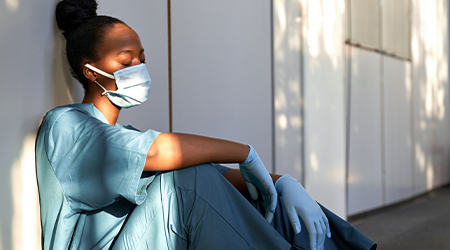
South Carolina healthcare workers are the foundation of our well-being, providing essential care in hospitals, clinics, and other medical settings across the state. Healthcare providers are a special type of person. It takes tremendous strength and grace to care for people facing medical challenges day after day. The work is meaningful and rewarding, but it is also physically demanding. Many healthcare professionals experience strains, sprains, and other injuries on the job. Most of the time, they push through the pain. They refuse to slow down, miss work, or fall short of supporting their co-workers and patients.
But some injuries cannot simply be ignored.
However, there comes a point when the injury is too serious to work through. When surgery, medical treatment, or extended recovery becomes necessary, filing a workers’ compensation claim is not a choice—it is the only option.
Unfortunately, many healthcare workers who finally seek help find themselves facing resistance instead of support. Instead of understanding, they may feel questioned, doubted, or even treated as if they did something wrong. In reality, they were simply doing their job and got hurt in the process.
According to the Bureau of Labor Statistics, the healthcare and social assistance sector reported 562,500 nonfatal workplace injuries and illnesses in a single year. These numbers highlight how common workplace hazards are in the healthcare field.
When an on-the-job injury or occupational illness happens, dedicated South Carolina medical professionals deserve reliable legal help. Trying to understand your rights and the available workers’ compensation benefits can be confusing, especially while recovering from a serious injury.
This is where having the right legal representation makes a difference. At Joye Law Firm Injury Lawyers, we’ve helped thousands of injured healthcare workers secure the fair compensation they are entitled to under the law. We have been representing injured South Carolinians since 1968, and we understand the unique challenges that healthcare workers face following a work-related injury. We know how to deal with insurance companies and fight for the maximum benefits you deserve.
We’re committed to securing positive outcomes for our clients and proud of our results, including the $310,000 settlement for a Summerville nurse who injured her back and right knee in a workplace fall, the $325,000 workers’ compensation settlement received by a pediatric respiratory therapist for a left shoulder injury, and the $275,000 settlement for a nurse who suffered a herniated C4-5 disc and a T8-9 disc protrusion while moving a patient. These results reflect our dedication to achieving justice for injured workers.
Common Injuries and Illnesses Facing Healthcare Professionals
The healthcare industry is exposed to potential hazards that lead to common injuries among healthcare professionals. While some injuries are sudden and dramatic, others develop slowly over time. Injured medical workers often suffer:
- Musculoskeletal injuries: These often affect the back, neck, and shoulders due to repetitive tasks like lifting patients or performing other strenuous duties. Spinal injuries are a common and serious consequence of patient handling.
- Needlestick injuries: These pose a serious risk of transmitting infectious diseases. This is an elevated risk for all medical workers in a healthcare setting.
- Repetitive stress injuries: These injuries develop over time from continuous motion operating medical devices.
- Slips, trips, and falls: The fast-paced environment and sometimes cluttered conditions of a hospital or clinic can lead to a serious fall.
- Violence in the workplace: Dealing with agitated patients or visitors can result in physical injury.
- Occupational illnesses: Exposure to chemicals, radiation, or sick patients can lead to serious illnesses, including infectious diseases or respiratory problems.
- Post-traumatic stress disorder (PTSD): Dealing with trauma and the emotional toll of critical care can lead to serious mental health conditions.
The Workers’ Compensation Process: How Injured Workers Get Help
The workers’ compensation process is key to supporting injured healthcare workers. The system is managed by the South Carolina Workers’ Compensation Commission, which oversees all claims and workers’ compensation disputes. Without guidance, navigating this bureaucratic environment can be challenging for injured workers, often leading to mistakes and denied claims.
Step 1: Reporting the Injury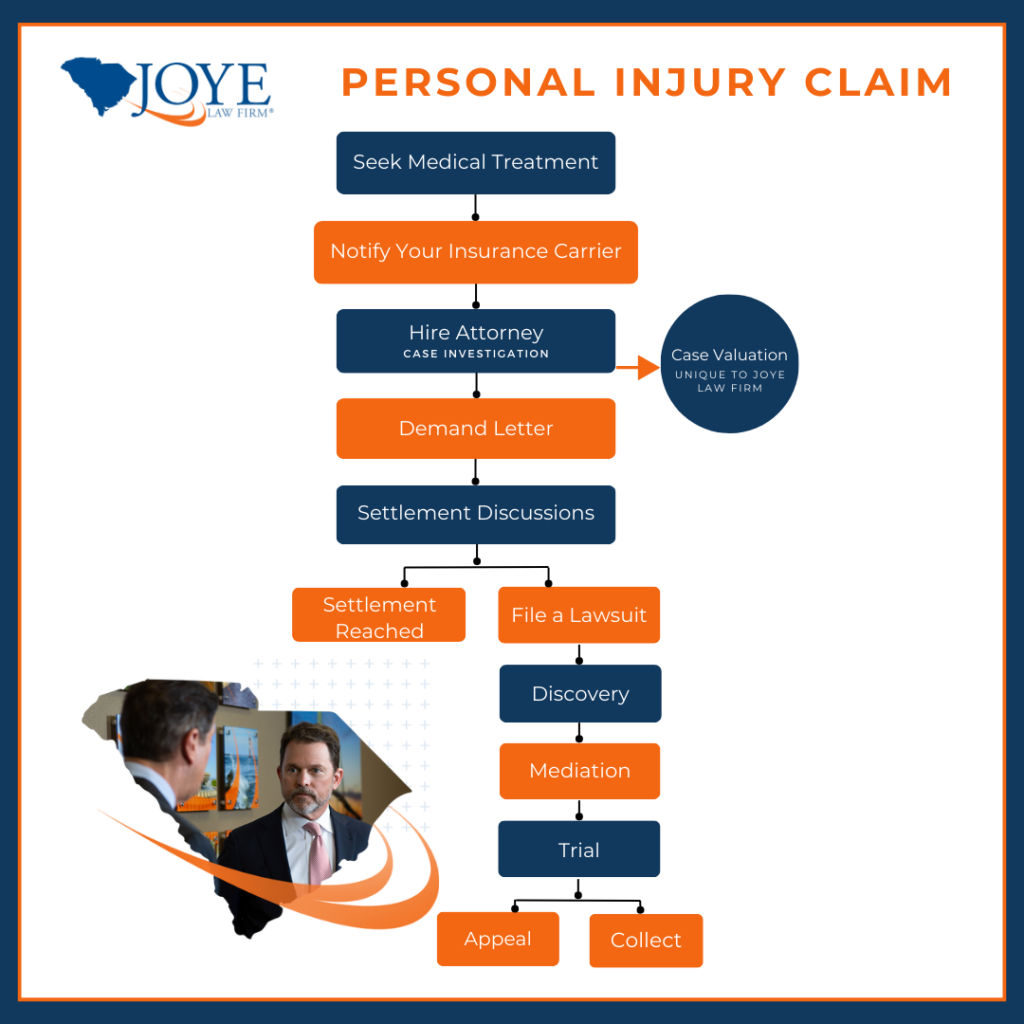
As mentioned, reporting your work injury to a supervisor is the very first step. You must complete this task within a specific timeframe, typically 90 days; however, it is always best to report it as soon as possible. Failure to report your injury in a timely manner could jeopardize your right to receive benefits.
Step 2: Seeking Medical Treatment
Your employer and their insurance provider are responsible for all medical bills and medical expenses that are necessary to treat your approved work-related condition. While your employer has the right to choose the doctor who provides your medical care, if you feel that your doctor isn’t taking your symptoms or concerns seriously, you have the right to request a hearing before the Workers’ Compensation Commission to seek a second medical opinion. The goal of medical treatment is to get you back to work, or if not possible, to determine the extent of your permanent disability.
Step 3: Filing the Workers’ Compensation Claim
A formal workers’ comp claim must be filed with the South Carolina Workers’ Compensation Commission. This is a crucial step in the legal process. A mistake here can lead to delays or the denial of your claim. This is where the assistance of a workers’ compensation lawyer becomes invaluable. We ensure all paperwork is completed accurately and submitted on time.
Step 4: Disputes and Hearings
It is common for insurance companies to dispute parts of a workers’ compensation claim, such as the necessity of certain medical care, the duration of recovery, or even whether the injury is truly work-related. They may try to minimize their financial liability. If your claim is denied or if there is a dispute over your benefits, your case may proceed to a hearing before a commissioner. Having a workers’ comp attorney from Joye Law Firm Injury Lawyers means you have an advocate prepared to argue your case and fight for maximum compensation.