

On This page
    traumatic brain injury symptom headache

    Traumatic brain injuries remain a major cause of disability and death in the United States and contribute to 30% of all trauma-related deaths each year. Falls, motor vehicle crashes, boating collisions, sports injuries, child abuse, and other traumatic events cause at least 1.7 million traumatic brain injuries annually, including many here in South Carolina.

    At Joye Law Firm Injury Lawyers, we have seen how traumatic brain injury (TBI) can change a person’s life. Fighting for the underdog is one of our core values, and it guides how we stand up for injured people who suddenly find themselves facing an unfair fight with powerful insurance companies. Our record reflects that commitment, including these recent results we’ve obtained for our clients:

    • $3 million settlement for a man who suffered a traumatic brain injury and other severe injuries after a drunk driver hit him head-on. This result included an additional $1 million dram shop settlement against a bar that irresponsibly overserved the driver.
    • $1.35 million settlement for an Upstate man injured when a car pulled out in front of his motorcycle, causing a T-bone collision that resulted in a traumatic brain injury and broken bones.
    • $455,000 settlement for a passenger who suffered a concussion and shoulder injury in a head-on boating collision.

    These outcomes show what can happen when proper care, investigation, and fierce advocacy come together. They also highlight how severe a TBI can be, even when the initial head trauma appears mild. Understanding the signs and symptoms of a brain injury can help injured people seek medical attention promptly. The sooner a traumatic brain injury is identified, the better the chances of protecting brain function, preventing worsening symptoms, and supporting recovery.

    How Our Values Influence and Support Clients Facing Traumatic Brain Injuries

    At Joye Law Firm Injury Lawyers, traumatic brain injury cases require more than technical legal knowledge alone. They require patience, clarity, and a deep respect for how profoundly a brain injury can alter a person’s life. Our firm culture shapes how we guide clients through uncertainty and advocate for their long-term well-being.

    We prioritize clear communication and responsibility. Many clients feel overwhelmed by medical terms and insurance questions. We focus on explaining each step in plain language, maintaining consistent communication, and taking responsibility for building a case that does not minimize injuries simply because symptoms may evolve over time.

    Our four Core Values guide our work, here’s how:

    • Compassion. We lead with compassion and understanding. We have a genuine desire to help people who feel outnumbered and outmatched by large insurance companies. Because brain injuries are not always visible at first or immediately understood, we take time to listen and learn how symptoms affect daily life, relationships, and the ability to work, so clients feel heard, believed, and supported.
    • Brave advocacy. Traumatic brain injury cases can be complex and hard-fought. We are fearless in holding negligent parties accountable, whether that means pursuing difficult claims, challenging insurers, or taking a case to court when necessary. Our willingness to take calculated risks helps level the playing field for injured clients.
    • Continuous Improvement. We prioritize careful preparation and improving our competitive edge. TBI cases demand attention to medical detail. We commit to understanding neurological findings, treatment plans, and future care needs so claims reflect the true scope of harm. Our drive to improve ensures we are always prepared to fight for the strongest possible outcome.
    • Respect for the common good. Our work reflects a long-standing dedication to South Carolinians and their families. Since 1968, we approach every case with the same care we would expect if the injury affected someone close to us. Our commitment extends beyond the cases we handle, with several of our attorneys holding or having held statewide leadership roles in legal organizations that help shape the laws impacting injured South Carolinians. We’re also proud to be a Preferred Attorney of the Brain Injury Association of America, reflecting our dedication to advocating for individuals and families facing the long-term effects of serious brain injuries.

    How a Traumatic Brain Injury Disrupts Normal Brain Function

    A traumatic brain injury occurs when a sudden external force damages brain tissue and disrupts normal brain function. The initial head trauma may involve a blow, jolt, or penetrating injury that affects nerve cells, blood flow, and the nervous system.

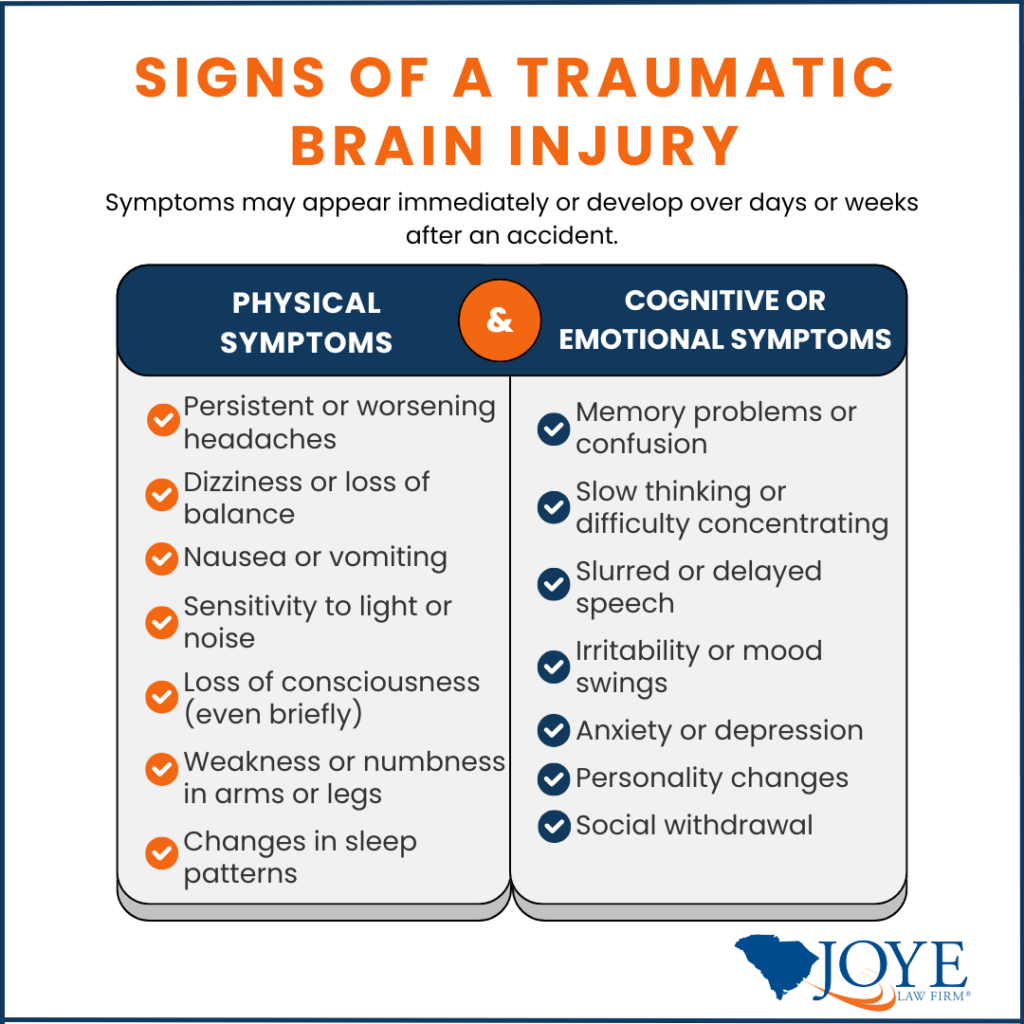
    Common causes include:Signs of TBI
    • Car accidents and other motor vehicle crashes
    • Falls accidents or unsafe premises
    • Sports injuries, including contact sports
    • Shaken baby syndrome
    • Penetrative injuries
    • Abuse involving infants or vulnerable adults

    Damage ranges from mild TBIs, often called concussions, to moderate or severe TBIs involving skull fractures, diffuse axonal injury, brain swelling, blood clots, fluid buildup, or increased intracranial pressure. Severe injuries can advance quickly and require emergency medical care. In the most extreme cases, loss of oxygen or massive swelling may result in a condition called brain death.

    Because no two TBIs are alike, families should watch for early warning signs in the hours and days that follow a traumatic event.


    Physical Changes That Signal a Possible TBI

    Many people expect a severe TBI to show obvious symptoms, but physical changes can be subtle at first. Immediate and delayed signs can include:


    Icon
    Headaches and Sensory Problems
    A severe headache that worsens over a few hours may signal dangerous intracranial pressure or bleeding. Blurred vision, ringing in the ears, and pupils that appear enlarged or unequal also warrant medical attention.
    Icon
    Nausea, Vomiting, or Convulsions
    Repeated nausea or convulsions point to a deeper injury. These symptoms often occur with moderate or severe TBI and require an emergency room evaluation.
    Icon
    Dizziness and Loss of Balance
    Damage to the parts of the brain that control balance may cause dizziness, unsteady movements, or sudden falls.
    Icon
    Loss of Consciousness
    A person may lose consciousness for a few seconds or remain unresponsive for a longer stretch. Even a brief blackout after a traumatic event can indicate a mild traumatic brain injury.
    Icon
    Weakness or Numbness
    Weakness in the arms or legs, poor coordination, or numbness may reflect damage to nerve cells or swelling around critical structures.
    Icon
    Changes in Sleep Patterns
    People may sleep far more or far less than usual. Trouble sleeping after a concussion or mild TBI is common but should never be dismissed.

    These physical symptoms tend to appear soon after a traumatic event, though some develop gradually over a few days.

    Cognitive and Behavioral Symptoms Families Often Notice First

    Cognitive changes are among the most unsettling signs of a TBI. They affect memory, attention, and decision-making. Family members often notice these shifts sooner than the injured person does.

    • Memory Problems: A person may struggle to remember recent events, conversations, instructions, or the traumatic event itself. This is common with mild head injuries and moderate TBIs.
    • Slow Thinking or Confusion: Long pauses, slow responses, or confusion can indicate damage affecting processing speed or concentration.
    • Slurred Speech: Slurred speech or difficulty forming words may reflect swelling or injury in areas controlling language or motor skills.
    • Poor Judgment or Impulsive Actions: Changes in behavior, irritability, or impulsive choices are common with frontal lobe injuries.
    • Trouble With Focus: Tasks that once felt easy, such as reading or following instructions, may now feel draining.

    Because cognitive and behavioral changes can become more noticeable as the brain attempts to heal, families should track symptoms for several weeks.

    Emotional and Mood-Related Symptoms After a TBI

    A TBI affects more than physical and cognitive abilities; emotional and mood-based changes are also common during recovery.

    Irritability or Mood Swings

    Sudden mood shifts may signal injury to areas of the brain involved in emotional control.

    Anxiety or Depression

    Chemical changes in the brain, combined with the stress and physical damage of the injury, may contribute to persistent sadness or anxiety. Some people require treatment or anti-anxiety medications as part of their care plan.

    Social Withdrawal

    A person may avoid friends, work, or hobbies due to fatigue, frustration, or overstimulation.

    Changes in Personality

    Family members may describe the injured person as “not acting like themselves.” This is often temporary but deserves attention from a healthcare provider.

    When Mild TBIs Turn Serious: Worsening Symptoms to Watch Closely

    A mild TBI or concussion often improves within a few weeks. However, brain injury symptoms may worsen without proper rest or monitoring. Watch for:

    • Disorientation that increases instead of fades
    • Constant or escalating headaches
    • Repeated vomiting
    • Sudden drowsiness or inability to stay awake
    • Clear fluid leaking from the nose or ears
    • Weakness on one side of the body
    • Seizures
    • Vision changes involving one or both pupils

    Rapid changes point to complications like brain swelling, rising blood pressure inside the skull, or blood clots. Increased intracranial pressure can cause long-term damage or stroke if untreated. Anyone showing these signs needs immediate medical attention, especially after sports injuries, falls, motor vehicle accidents, or high-impact collisions.

    Why Early Detection and Legal Support Matter

    Prompt recognition of TBI symptoms improves medical outcomes. It also strengthens an injury claim by creating clear documentation from the start. Car accidents and other motor vehicle accidents, boating crashes, falls at unsafe properties, and other traumatic events often involve insurance companies that dispute liability or argue the symptoms existed before the crash.

    Joye Law Firm Injury Lawyers works to protect injured clients from these tactics. If you have a TBI case, we’ll gather your medical records, brain imaging results, neurological exams, witness statements, and provide evidence that shows how the TBI changed your life. We also work with medical professionals to understand long-term effects, including chronic traumatic encephalopathy concerns or permanent loss of function.

    When families understand the signs and symptoms of a TBI, they are better positioned to protect both health and future stability.

    When You Should Call an Attorney After a Suspected TBI

    Seek legal guidance if any of the following apply:

    • The injury happened in a motor vehicle accident (car, truck, motorcycle, or pedestrian wreck), during a workplace incident, or at someone else’s property
    • Symptoms worsened after the traumatic event
    • The injured person missed work or school
    • Doctors identified brain swelling, skull fractures, diffuse axonal injury, or bleeding
    • The insurance company questions the severity of the injury
    • A child suffered physical trauma or abuse
    • The crash involved a drunk driver, a commercial vehicle, or unsafe premises

    TBIs often lead to high medical bills, time away from work, and long-term uncertainty. Early legal support ensures you understand your rights and the steps needed to secure financial stability.

    Frequently Asked Questions About TBIs

    Signs of TBI

    How soon after an accident can TBI symptoms first appear?

    Some symptoms appear immediately, while others may not surface for hours or even days. Because delayed symptoms are common, medical monitoring is essential even when someone initially feels “fine.”

    Can someone have a TBI without ever hitting their head?

    Yes. The brain can sustain injury from rapid acceleration or deceleration (such as whiplash in a crash) even without direct impact to the skull.

    Do all TBIs show up on imaging tests like CT scans or MRIs?

    Not always. Mild TBIs, including many concussions, may not appear on standard imaging even though the person is experiencing fundamental cognitive, emotional, or physical changes.

    How long does recovery from a traumatic brain injury typically take?

    Recovery timelines vary widely. Some people improve within weeks, while others experience symptoms for months or face long-term effects depending on the severity and location of the injury.

    Is it possible for TBI symptoms to return or worsen after initial improvement?

    Yes. Overexertion, stress, or secondary injuries can trigger symptom flare-ups. This is one reason doctors often recommend rest and gradual return to normal activities.

    Joye Law Firm Injury Lawyers Stands with Families Facing Traumatic Brain Injuries

    Recovering from a traumatic brain injury comes with uncertainty for both the injured person and their family. Many feel unsure about what symptoms mean, how long recovery may take, or how the injury will affect work and daily life. These concerns are real and deserve support.

    We often hear from clients who feel lost after a traumatic event but find relief once they have someone to rely on.If you believe you or a loved one is showing signs of a TBI, schedule a free consultation with us. An initial consultation can help you understand what to do next and give you the reassurance you may need during a difficult time.

    Contact us
    Carolina talking on the phone with a client