

On This page
    surgeons operating

    Wrong site and wrong patient surgery claims are among the most alarming medical errors a person can face. These events shake a patient’s trust in the health care system, leave lifelong injuries, and raise serious questions about patient safety in the operating room.

    These events are not simple mishaps. They reveal serious underlying safety problems inside healthcare organizations, and they are shockingly common. A jaw-dropping report from the Association of Perioperative Registered Nurses (based on data from The Joint Commission) found a 26 percent rise in wrong-site, wrong-procedure, wrong-patient, and wrong-implant surgeries in 2023. This increase shows how quickly a single communication mistake, incorrect patient information, incomplete site marking, or a rushed safety step can lead to a devastating outcome. When these breakdowns occur, the impact on a patient’s body, health, and future is profound.

    At Joye Law Firm Injury Lawyers, our attorneys have recovered millions of dollars in settlements in personal injury cases. Since 1968, we’ve built a reputation of putting people first. We don’t just handle legal matters; we care for individuals and families who are navigating some of the hardest moments of their lives. Our work includes fighting for individuals harmed by preventable medical errors that should never occur in any hospital or ambulatory surgery center.

    Let a South Carolina medical malpractice lawyer explain what wrong site and wrong patient surgery mean according to the law, how these events happen, and how injured patients can hold health care providers accountable for wrong surgical procedures with a medical malpractice claim.

    How Wrong Site and Wrong Patient Surgeries Happen in Modern HealthcareMedical Malpractice for wrong site or wrong patient claims
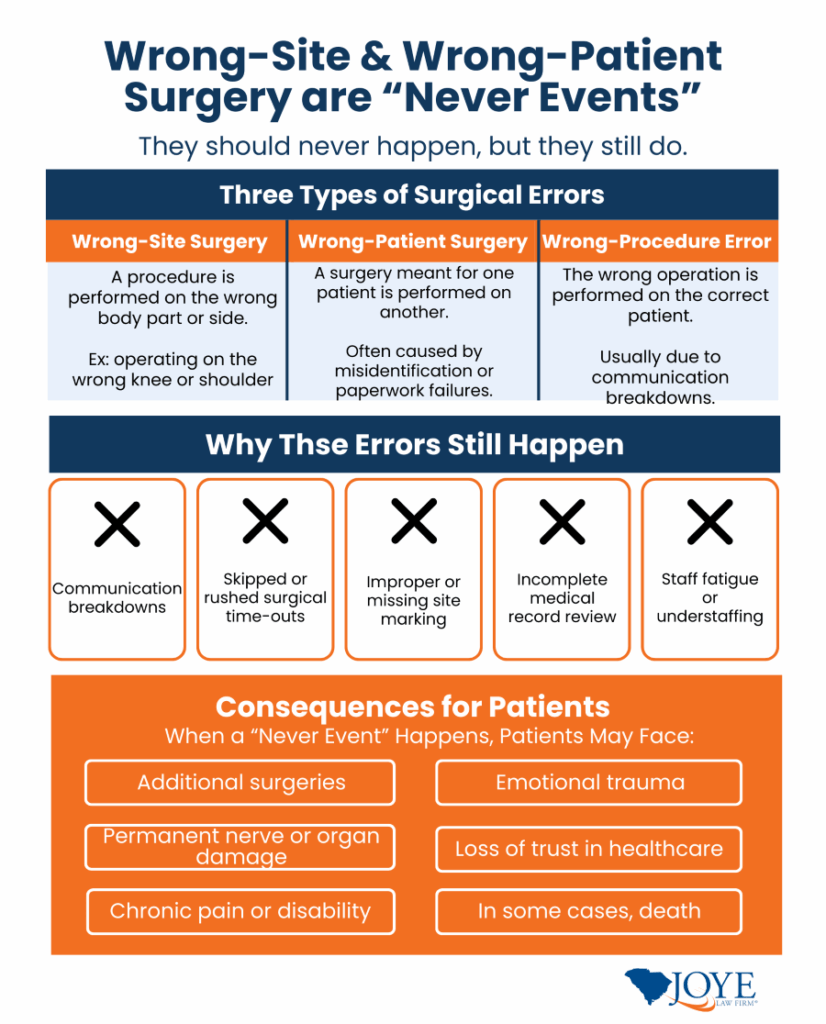
    Wrong-site and wrong-patient surgeries are classified as “never events” because they should never occur when health care professionals follow accepted safety procedures. Despite strong guidance from the Joint Commission Center for Transforming Healthcare, the National Quality Forum, the American Hospital Association, the Department of Health and Human Services, and similar organizations, such errors continue across the United States.

    These events fall into three categories:

    1. Wrong Site Surgery

    A wrong-site surgery occurs when a surgical procedure is performed on the wrong part of a patient’s body. Examples include operating on the opposite knee, removing tissue from the wrong breast, or performing orthopedic surgery on the wrong side of a patient’s body. This shows a breakdown in site marking, patient verification, or the time-out process, a critical step in medical procedures where the team stops to verify information before making incisions.

    2. Wrong Patient Surgery

    Wrong patient errors occur when a procedure intended for one patient is performed on another. These events involve patient misidentification, incorrect paperwork, improper handoffs, and failures in patient information systems. A surgery performed on the wrong person can expose a patient to a procedure that was never needed and leave them with new injuries, while another patient’s medical condition remains untreated.

    3. Wrong Procedure Errors

    In a wrong procedure event, the surgical team performs the incorrect procedure even though they have the correct patient and the correct site. This often occurs due to communication failures, confusion between similar procedures, or incomplete review of the medical record.

    Each event signals deeper safety problems inside the facility, including human error, system weaknesses, rushed preoperative steps, and poor adherence to safety rules written to prevent such mistakes.

    Why These Medical Errors Continue Despite Known Safety Measures

    Healthcare research has examined wrong-site and wrong-patient events for decades, including studies published in the Joint Commission Journal and closed claims reviews from malpractice insurers. These reviews show several contributing factors that appear again and again:

    1. Communication Breakdowns
    Many surgical errors begin with poor communication between surgeons, nurses, anesthesia teams, and other health care professionals. When team members assume the others have verified the patient or procedure site, errors can slip through. Incorrect abbreviations or unclear handwritten notes increase the risk further.
    2. Rushed or Skipped Universal Protocol Steps
    The universal protocol for preventing wrong site, wrong person, and wrong procedure events includes three protective steps: patient verification, site marking, and a time-out before the procedure begins. When staff feel pressure to move quickly or a surgeon insists on proceeding, these steps may be skipped or shortened.
    3. Incomplete Site Marking
    Improper procedure site marking is a top contributing factor in wrong-site surgeries. A mark placed in the wrong spot, or no mark at all, increases the risk of mistakes once the patient is positioned on the operating table.
    4. Poor Preoperative Workflows
    Health care organizations that lack strong preoperative checklists or depend too heavily on electronic records without confirming details in person see more sentinel events involving wrong surgeries.
    5. Staffing Shortages and Fatigue
    Rushed schedules, staff turnover, and long hours increase the risk of human error. Fatigue impacts performance in all clinical specialties, including orthopedic surgery, neurosurgery, general surgery, and other fields with invasive procedures.
    6. Inconsistent Patient Information
    If the patient’s identity, medical record, or images do not match the planned procedure, errors become more likely. The patient may have undergone surgery before, have bilateral conditions, or have unclear medical notes that confuse the team.

    Wrong-Site Surgery: What the Closed-Claim Data Reveals

    A recent review from The Joint Commission of closed malpractice claims from 2013 to 2020 provides one of the clearest snapshots we have of wrong-site surgery. The analysis examined 68 finalized claims and uncovered trends that show where risks remain highest and why these preventable mistakes still happen.

    Patients in these cases averaged about 56 years old, with men and women affected almost equally. The highest number of claims came from orthopedic surgery, which accounted for more than a third of all cases, followed by neurosurgery and urology. Among procedures, spine and intervertebral disc operations appeared most frequently.

    The consequences for patients were significant. Nearly half required an additional surgery to fix the error, while others suffered ongoing pain, mobility problems, and worsening injuries. In about 7% of cases, the patients died. These errors also carried substantial financial weight. On average, each claim closed at roughly $136,000, and more than 60% resulted in settlement.

    When researchers examined what contributed to these events, one theme stood out: the policies designed to prevent wrong-site surgery were in place, but they weren’t consistently followed. Over 80% of cases involved failures to adhere to established safety protocols such as pre-operative verification, site marking, and surgical time-outs. In more than 40% of cases, clinicians had not adequately reviewed the patient’s medical record before proceeding. These gaps were especially pronounced in inpatient settings, where the severity of harm tended to be greater.

    Consequences of Wrong Site and Wrong Patient Surgeries

    The physical injuries from wrong-site or wrong-patient events vary widely. Common alleged injuries included:

    • Nerve damage
    • Organ damage or loss
    • Loss of healthy tissue
    • Loss of mobility
    • Infection
    • Need for additional corrective surgeries
    • Negative mental health outcomes
    • Death

    In many closed claims, the most common alleged injuries involved damage from invasive procedures that were completely unnecessary. Patients may also develop psychological injuries and trauma due to the shock of learning that a wrong surgical procedure was performed.

    The financial toll is significant. Patients often face:

    • Additional surgeries to correct the mistake
    • Hospital bills
    • Time away from work
    • Long rehabilitation
    • Loss of earning ability

    Families may deal with stress, hardship, and long waiting periods while the patient recovers. Or they may need to restructure their lives to become full-time caregivers.

    Wrong-site surgeries and wrong-patient errors also compromise public trust in health care. They indicate deeper failures inside systems that are supposed to protect the patient’s body and safety.

    Filing a Medical Malpractice Claim for Wrong Site or Wrong Patient SurgeryScenes from Joye Law Firm Injury Lawyers's Columbia office in May of 2024.

    Victims of wrong-site, wrong-patient, or wrong-procedure errors often face long recoveries and new medical challenges. A medical malpractice claim helps patients hold health care providers accountable and seek compensation for losses caused by preventable medical errors.

    To prove malpractice in these cases, a patient must show:

    1. A health care provider owed a duty of care
    2. The provider failed to follow accepted surgical practices
    3. A wrong surgical procedure, wrong site error, or wrong person surgery occurred
    4. The mistake caused injury and damage

    These cases often require testimony from relevant clinical specialties, reviews of operating room records, expert examination of the universal protocol steps, and a close review of risk factors and contributing factors.

    Compensation may include:

    • Medical bills
    • Future care
    • Lost income
    • Loss of earning ability
    • Pain and suffering
    • Long-term disability
    • Funeral expenses, in the case of death

    Some cases also reveal broader systemic failures. A thorough claim can help improve patient safety by prompting changes inside the facility.

    FAQs About Wrong Site and Wrong Patient Surgery Claims

    MedMal Wrong Site/Patient Claim

    What should I do if I suspect a surgical mistake but the hospital has not admitted anything?

    You should request your medical records as soon as possible and document the symptoms or complications you experienced after the procedure. Hospitals sometimes delay confirming an error, so it is important to speak with a medical malpractice attorney who can review the records and determine if the surgical team followed proper safety steps.

    How long do I have to file a medical malpractice claim in South Carolina for a wrong site or wrong patient surgery?

    South Carolina generally allows three years from the date of the injury or discovery of the injury. There are exceptions that can shorten or extend the time, so it is important to speak with an attorney who can calculate the exact deadline based on your situation.

    Does a wrong site or wrong patient surgery always require a second corrective procedure?

    Not always. Some patients need immediate revision surgery, while others may require long-term treatment, physical therapy, or monitoring. The need for corrective care depends on the type of procedure performed and the damage done during the mistaken surgery.

    Can wrong site or wrong patient errors occur during outpatient or ambulatory surgery center procedures?

    Yes. Wrong site and wrong patient errors happen in both hospitals and ambulatory surgery centers. Any facility that performs invasive procedures has a responsibility to follow safety protocols that prevent these events.

    Is the surgeon always the person legally responsible for a wrong site or wrong patient event?

    Responsibility can fall on several parties. Surgeons, nurses, anesthesia teams, and the facility itself may share liability if they failed to follow established safety procedures. A thorough investigation determines which providers or organizations contributed to the mistake.

    Speak With an Experienced South Carolina Medical Malpractice Attorney Today

    When a patient walks into a hospital or surgery center, they place absolute trust in the hands of medical professionals. Wrong site and wrong patient surgery events break that trust in a way few other injuries can. These cases call for a legal team that understands the medical and human impact of such errors and is prepared to guide clients through an unfamiliar process with clarity and respect.

    At Joye Law Firm Injury Lawyers, communication and support are just as important as strong legal advocacy. We make sure our clients feel heard, informed, and protected. We recognize that you may be coming to us during one of the most difficult chapters of your lives. We believe you deserve an attorney who stands beside you from the first conversation through the final resolution. With more than 300 years of combined experience representing South Carolinians with life-changing injuries, our attorneys bring both skill and compassion to every case. Our lawyers hold AV ratings from the prestigious Martindale-Hubbell, and several have been recognized as South Carolina Super Lawyers. We work closely with a trusted network of attorneys experienced in complex medical malpractice and negligence cases—so you can be confident your case will receive the attention it deserves.

    If you or a loved one has been harmed by a wrong-site or wrong-patient surgery, we are ready to help you understand your options and take the next step. Call us at (843) 554-3100 for a free consultation with our team at Joye Law Firm Injury Lawyers.

    Contact us
    Jeff Gerardi at his computer